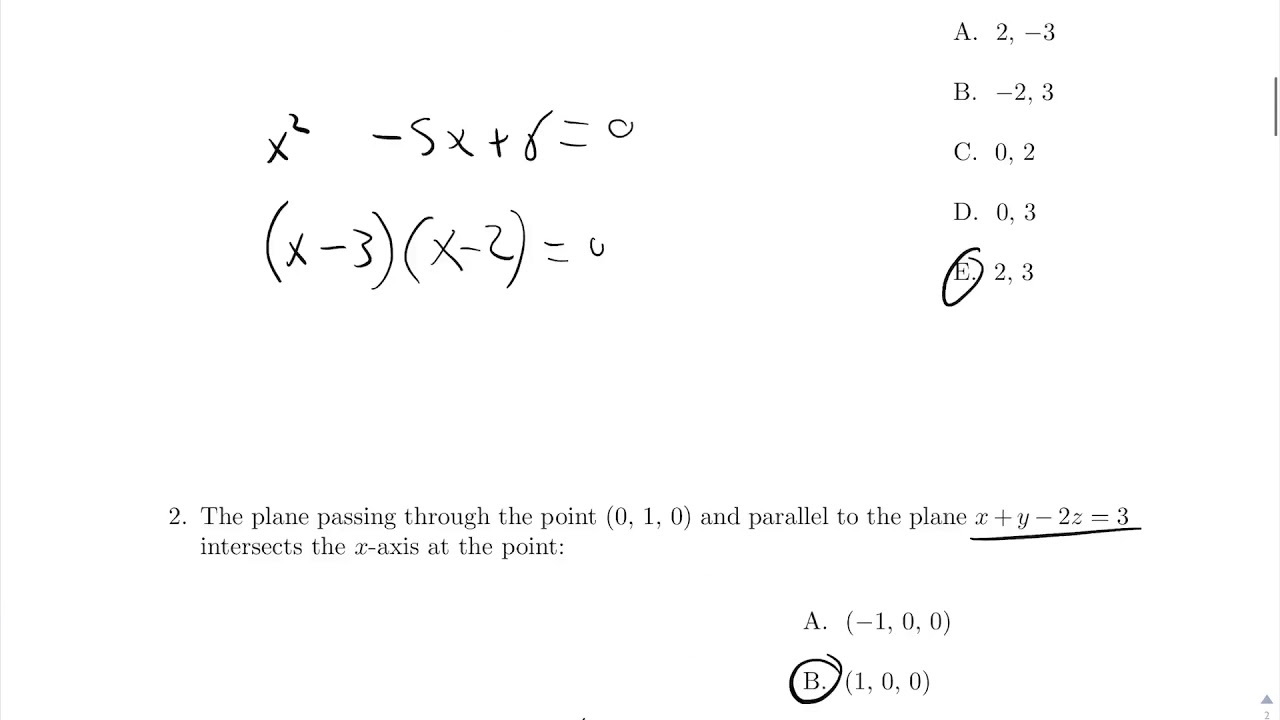
Ma 261 Past Exams Ace Your Purdue Calculus Course
Lead: Navigating the challenging landscape of university-level mathematics often requires strategic preparation, and for students tackling Purdue University's MA 261, or Multivariate Calculus, a highly effective resource stands out: past exams. This rigorous course forms a critical foundation for numerous STEM fields, making success in it paramount. This article explores how judiciously leveraging MA 261 past exams can provide a significant advantage, offering insights into understanding course expectations, identifying key concepts, and ultimately, mastering the material to achieve academic excellence.
What Is MA 261 Past Exams Ace Your Purdue Calculus Course?
MA 261, Multivariate Calculus, is a foundational mathematics course at Purdue University, essential for students pursuing engineering, science, and related disciplines. It typically covers topics such as vectors and the geometry of space, vector-valued functions, partial derivatives, multiple integrals, and vector calculus. The phrase "MA 261 past exams ace your Purdue calculus course" refers to the well-established and highly recommended study strategy of utilizing previous MA 261 examinations to prepare for current assessments. This method goes beyond mere review; it involves:
- Familiarization with typical question formats and difficulty levels.
- Identification of frequently tested concepts and problem types.
- Practice under timed, exam-like conditions to build endurance and speed.
Why MA 261 Past Exams Is Trending
The strategic use of past exams for MA 261 at Purdue isn't a fleeting trend but a consistently popular and highly effective study method. Its enduring relevance stems from several key factors. University calculus courses, particularly those as demanding as MA 261, are notorious for their comprehensive scope and analytical rigor. Students face significant pressure to perform well, as these grades often influence academic standing, program progression, and future career prospects. Past exams offer a tangible roadmap, providing a direct glimpse into the expectations of instructors and the structure of official assessments. In an academic environment where resources can be overwhelming, the focused nature of past exams offers a clear, actionable path to improvement. The high stakes involved in foundational STEM courses naturally drive students to seek the most efficient and impactful study techniques, making past exam practice an indispensable part of their preparation toolkit.
Dates, Locations, or Key Details
While MA 261 is a standard offering at Purdue University each semester, the strategy of utilizing past exams is not tied to specific external events but rather to the academic calendar and individual study habits. The critical periods for engagement with past exams are typically:
- Mid-term preparation: Weeks leading up to the first and second mid-term examinations.
- Final exam season: The concentrated study period before the comprehensive final exam.
- Throughout the semester: As a supplementary tool for understanding lecture material and homework assignments.
How To Get Involved or Access MA 261 Past Exams
Accessing and effectively utilizing MA 261 past exams is a straightforward process, provided students know where to look and how to approach the material. Heres a practical guide:
- Identify Official Sources: Begin by checking the Purdue University Libraries website, which often hosts archives of past exams for various courses. Many MA 261 instructors also provide a selection of previous exams or practice problems directly on their course pages or through Brightspace.
- Engage with Study Groups: Collaborate with peers. Study groups are excellent forums for sharing access to exams, discussing solutions, and collectively identifying common pitfalls.
- Utilize Academic Support Services: Purdues tutoring centers or supplemental instruction (SI) sessions often incorporate past exam questions into their review materials and discussions.
- Simulate Exam Conditions: Once past exams are acquired, dedicate specific study blocks to completing them under timed conditions, without notes or external help. This builds stamina and helps manage exam anxiety.
- Review and Analyze: After attempting an exam, thoroughly review both correct and incorrect answers. Understand the underlying concepts and solution methods. Focus on identifying recurring themes and areas requiring further study.
What To Expect
- Enhanced Conceptual Understanding: Regular exposure to diverse problem sets from past exams deepens comprehension of multivariate calculus principles.
- Improved Problem-Solving Skills: Practice under timed conditions refines the ability to approach complex problems efficiently and accurately.
- Reduced Exam Anxiety: Familiarity with the exam format and typical question styles helps alleviate stress and builds confidence on test day.
- Better Time Management: Learning to complete a full exam within the allotted time is a crucial skill honed through consistent past exam practice.
- Identification of Weaknesses: Past exams serve as diagnostic tools, highlighting specific topics or problem types where further study is needed.
The Broader Impact of MA 261 Past Exams
The impact of leveraging MA 261 past exams extends far beyond achieving a good grade in a single course. This strategic study approach instills valuable academic discipline and self-learning skills that are transferable to virtually all subsequent rigorous STEM coursework. By actively dissecting and solving problems from previous assessments, students develop a stronger analytical mindset, refine their critical thinking, and become more adept at independent problem-solvingqualities highly prized in both academia and professional careers. This method fosters a proactive learning culture, emphasizing not just rote memorization but deep understanding and strategic application of knowledge. Success in foundational courses like MA 261, bolstered by effective study habits, can significantly influence a student's confidence and trajectory in their chosen field, laying a solid groundwork for advanced studies and professional challenges.
Engaging with past exams isn't about memorizing answers; it's about understanding the logic and approach required for success in high-stakes environments. It's an invaluable tool for self-assessment and strategic preparation.
Economic or Social Insights
The emphasis on mastering challenging courses like MA 261 through resources like past exams contributes significantly to the broader academic ecosystem and, by extension, the talent pipeline for STEM industries. Universities like Purdue, known for their rigorous engineering and science programs, rely on students effectively tackling foundational subjects. Strong performance in calculus, often a gatekeeper course, ensures a steady flow of qualified graduates into fields demanding advanced analytical skills. From an economic perspective, this directly impacts the availability of skilled professionals in sectors ranging from advanced manufacturing and aerospace to data science and software development. Publications like Business Insider and Forbes frequently highlight the ongoing demand for STEM talent, underscoring the value of robust academic preparation. Socially, fostering successful learning strategies for demanding subjects helps reduce academic attrition, empowering more students to persist in challenging majors and contribute to innovation and economic growth.
Frequently Asked Questions About MA 261 Past Exams Ace Your Purdue Calculus Course
- What is MA 261 past exams ace your purdue calculus course? This phrase refers to the comprehensive strategy of using historical examination papers from Purdue University's MA 261 (Multivariate Calculus) course as a primary study tool. The goal is to deeply understand course material, familiarize oneself with exam formats, and ultimately achieve a high level of performance in the course.
- Why is MA 261 past exams popular? The popularity stems from the inherent challenge of multivariate calculus and the direct relevance of past exams as a study aid. They offer an authentic preview of assessment styles and content, reducing uncertainty and providing a highly targeted way to practice and identify areas for improvement, thus significantly boosting student confidence and grades.
- How can people participate or experience it? Students typically access past exams through official Purdue University academic resources, such as library archives or course-specific websites. They then engage in self-study, ideally under timed conditions, and often discuss problems and solutions within study groups or with academic advisors and tutors.
- Is it legitimate or official? Yes, using past exams as a study tool is a legitimate and widely accepted academic practice. Many universities openly provide such resources, and instructors often encourage students to review previous tests to aid their learning and preparation, ensuring it aligns with academic integrity standards.
- What can attendees or users expect? Users can expect a more structured and effective study routine, leading to a deeper understanding of MA 261 concepts, improved problem-solving speed and accuracy, and a significant reduction in pre-exam anxiety. The ultimate expectation is to enhance overall academic performance in the course.
Conclusion
The strategic deployment of MA 261 past exams remains an indispensable approach for Purdue students aiming to excel in Multivariate Calculus. It transcends mere rote learning, fostering a deeper analytical understanding, improved problem-solving capabilities, and a significant boost in academic confidence. By providing a direct lens into the expectations of a rigorous university course, past exams empower students to prepare effectively, identify and address weaknesses, and ultimately master complex mathematical concepts. For anyone enrolled in MA 261, integrating past exam practice into their study regimen is not merely a recommendation but a proven pathway to success.
Call to Action: Purdue students are strongly encouraged to visit the official Purdue Libraries website, consult their MA 261 course pages, and engage with academic support services to access and effectively utilize past exam resources for their upcoming assessments. Proactive engagement is key to academic success.