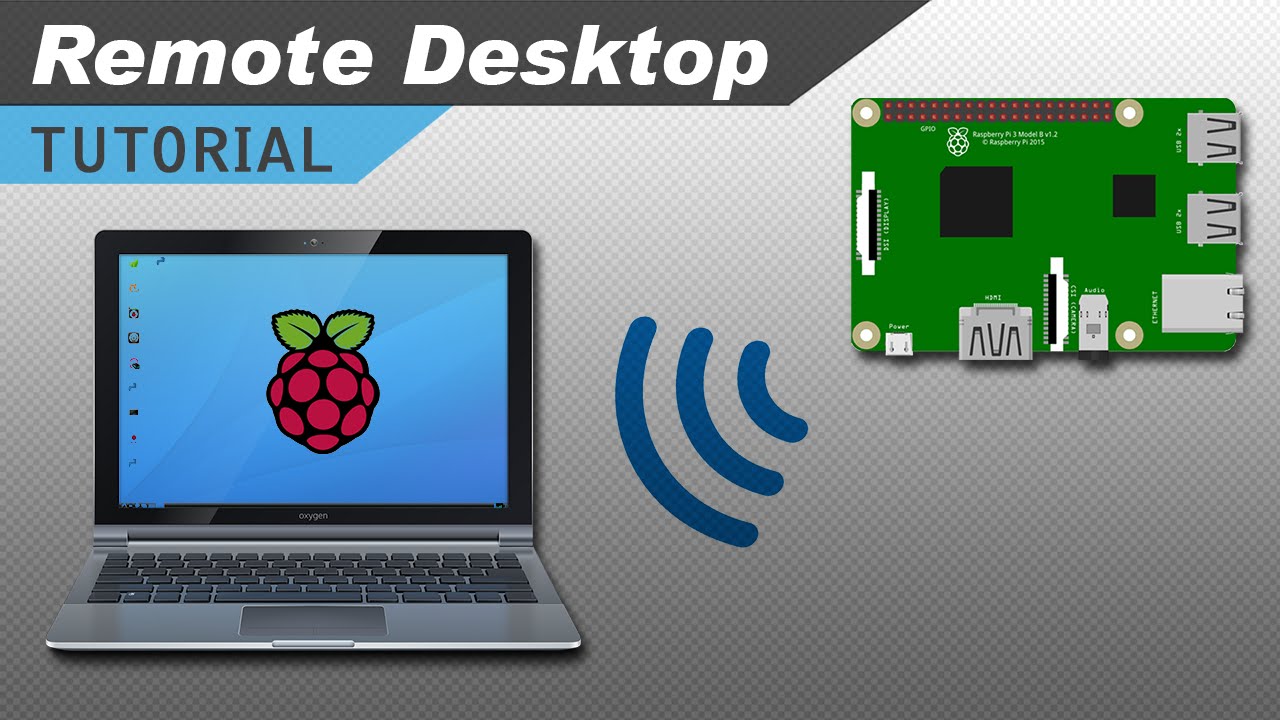
Free Remote Desktop Access To Your Raspberry Pi
Lead: In an increasingly connected world, the ability to manage and interact with computing devices remotely has become a cornerstone of efficiency and accessibility. For enthusiasts, educators, and professionals utilizing the compact yet powerful Raspberry Pi, the concept of free remote desktop access offers a significant leap in convenience. This functionality transforms the credit-card-sized computer from a standalone unit requiring a dedicated monitor and peripherals into a versatile, headless server or workstation manageable from virtually anywhere. Understanding the mechanisms and benefits of this capability is essential for maximizing the Raspberry Pis potential, providing users with unparalleled flexibility and control over their projects and systems.
What Is Free Remote Desktop Access to Your Raspberry Pi?
Free remote desktop access to a Raspberry Pi refers to the process of connecting to its graphical user interface (GUI) from another computer or mobile device over a network, without direct physical interaction. This allows users to see the Pi's desktop environment, launch applications, browse files, and perform any task as if they were sitting directly in front of it. Several protocols and software solutions facilitate this, with Virtual Network Computing (VNC) being one of the most prominent and widely adopted free methods for Raspberry Pi users. Other options, like setting up a remote desktop protocol (RDP) server on the Pi (often for Windows clients), also exist, providing similar functionalities. The core idea is to project the Pis desktop to a client device, enabling seamless operation from a distance.
- Virtual Network Computing (VNC): A graphical desktop sharing system that uses the RFB (remote framebuffer) protocol to remotely control another computer. It transmits the screen updates from the Pi to the client and sends keyboard and mouse input back to the Pi.
- Remote Desktop Protocol (RDP): While primarily a Microsoft protocol, open-source RDP servers can be installed on the Raspberry Pi, allowing Windows users to connect using their native Remote Desktop Connection client.
- Secure Shell (SSH): Although not a graphical remote desktop, SSH is fundamental for secure command-line remote access and often serves as a prerequisite or companion to graphical solutions, allowing configuration and management of the remote desktop server itself.
Why Free Remote Desktop Access to Your Raspberry Pi Is Trending
The growing popularity of free remote desktop access to Raspberry Pi devices is multifaceted, driven by both the inherent capabilities of the Pi and evolving technological needs. The Raspberry Pi's affordability and versatility have made it a favored platform for a wide array of projects, from home automation and media centers to educational tools and lightweight servers. Remote access eliminates the need for a dedicated keyboard, mouse, and monitor, making the Pi more adaptable for embedded applications or deployments in hard-to-reach locations. This trend aligns with the broader shift towards remote management in computing, enabling developers, hobbyists, and educators to work efficiently regardless of physical proximity to their devices. The rise of DIY electronics, IoT projects, and remote learning initiatives further amplifies the demand for such seamless, cost-effective remote control solutions.
Dates, Locations, or Key Details
The concept of remote access computing predates the Raspberry Pi by decades, with technologies like VNC emerging in the 1990s from AT&T Laboratories Cambridge. When the first Raspberry Pi models launched in 2012, they quickly became a sensation, fostering a global community of users. The integration of remote desktop capabilities, particularly VNC, was a natural progression, enabling users to truly leverage the Pi's compact form factor. The official Raspberry Pi operating system, Raspberry Pi OS (formerly Raspbian), has steadily improved its support for remote access tools, often including pre-installed VNC server options, streamlining the setup process. Key developments have focused on improving performance over various network conditions and enhancing security features, ensuring reliable and protected connections for users worldwide, from classrooms in the U.S. to research labs across Europe and Asia.
How To Get Involved or Access Free Remote Desktop Access to Your Raspberry Pi
Establishing free remote desktop access to a Raspberry Pi typically involves a series of straightforward steps that can be followed by users with varying levels of technical expertise. The process primarily focuses on configuring the Raspberry Pi to host the remote desktop service and then using a compatible client application on another device to connect.
- Prepare the Raspberry Pi: Ensure the Raspberry Pi is powered on, connected to a network (either Wi-Fi or Ethernet), and running the latest version of Raspberry Pi OS. It is often recommended to perform a system update and upgrade.
- Enable/Install Remote Desktop Server: For Raspberry Pi OS, a VNC server (often RealVNC Connect) is frequently pre-installed or easily installable. This can typically be enabled through the Raspberry Pi Configuration tool under the "Interfaces" tab, or by installing a VNC server package via the command line. A password for the VNC connection will need to be set.
- Determine Raspberry Pi's IP Address: The IP address of the Raspberry Pi is necessary for the client device to locate it on the network. This can be found by running a command like
hostname -Iin the Pi's terminal. - Install VNC Client Software: On the computer or mobile device from which access is desired, download and install a VNC viewer application. Popular options include RealVNC Viewer, TightVNC Viewer, or other compatible VNC clients.
- Establish Connection: Open the VNC viewer on the client device and enter the Raspberry Pi's IP address (and sometimes a port number, e.g.,
192.168.1.100:5901). Provide the VNC password when prompted to establish the remote desktop session. - (Optional) Configure for Internet Access: For accessing the Pi from outside the local network, additional steps may be required, such as setting up port forwarding on the router or utilizing a VPN or cloud-based VNC service for secure remote access over the internet.
What To Expect
- Full Graphical Interface: Users can expect to see and interact with the complete desktop environment of their Raspberry Pi, including icons, menus, and applications, just as if it were directly connected.
- Responsive Control: While some latency may occur depending on network conditions, modern remote desktop solutions generally offer a responsive user experience for most tasks, allowing for smooth navigation and interaction.
- Cross-Platform Compatibility: Client applications are available for Windows, macOS, Linux, Android, and iOS, providing broad flexibility for accessing the Raspberry Pi from almost any device.
- Security Considerations: A strong password for the remote connection is crucial. For access over the internet, encryption (often built into VNC, or via SSH tunneling/VPN) is vital to protect against unauthorized access.
The Broader Impact of Free Remote Desktop Access to Your Raspberry Pi
The impact of free remote desktop access on the Raspberry Pi ecosystem extends far beyond simple convenience. It fundamentally enhances the device's utility in various sectors. In education, it enables remote labs where students can access and experiment with Raspberry Pis without needing physical hardware for each student, fostering STEM skills. For hobbyists, it unlocks new possibilities for home automation, allowing control of smart devices from anywhere. Businesses leverage it for deploying low-cost, remote monitoring systems or edge computing devices, managing them centrally without on-site visits. This capability democratizes access to sophisticated computing paradigms, transforming the Pi from a niche development board into a truly versatile, remotely deployable microcomputer, underpinning innovations in IoT, robotics, and educational technology.
The ability to remotely control a Raspberry Pi changes the game for so many projects. It liberates the device from the desktop, making it a true workhorse in embedded systems and remote deployments, notes a seasoned open-source hardware enthusiast. Its about enabling creativity without physical constraints.
Economic or Social Insights
From an economic standpoint, free remote desktop access significantly lowers the total cost of ownership for Raspberry Pi deployments. By eliminating the need for dedicated peripherals per unit, organizations and individuals save on hardware expenses. This is particularly impactful in educational settings or for startups developing proof-of-concept hardware, making advanced computing accessible on a budget. Socially, it promotes digital inclusion by allowing remote participation in technical projects and educational programs. The widespread availability of free, robust tools for remote Pi management contributes to a vibrant open-source community, fostering shared knowledge and collaborative innovation, a trend often highlighted in technology publications such as TechCrunch and Wired when discussing accessibility in computing.
Frequently Asked Questions About Free Remote Desktop Access to Your Raspberry Pi
- What is free remote desktop access to your Raspberry Pi? It is the capability to view and control the graphical desktop environment of a Raspberry Pi from another computer or mobile device over a network connection, without requiring a physical monitor, keyboard, or mouse directly attached to the Pi.
- Why is free remote desktop access to your Raspberry Pi popular? Its popularity stems from the Raspberry Pi's versatility, affordability, and compact size. Remote access allows users to place their Pi anywhere and manage it conveniently, making it ideal for embedded projects, remote monitoring, home servers, and educational purposes where direct physical interaction is impractical.
- How can people participate or experience it? Users can enable a VNC server (or similar remote desktop server) on their Raspberry Pi, set a strong password, and then use a free VNC client application on a desktop computer, laptop, or smartphone to connect to the Pi's IP address and access its desktop.
- Is it legitimate or official? Yes, the methods for free remote desktop access, such as VNC, are legitimate and widely supported. Raspberry Pi OS often includes pre-installed or easily installable VNC server software, making it an officially endorsed and integrated feature within the ecosystem.
- What can attendees or users expect? Users can expect a full graphical interface experience, allowing them to open applications, manage files, and perform system configurations. While network conditions can affect responsiveness, modern solutions offer a generally smooth and efficient way to interact with the Raspberry Pi remotely.
Conclusion
Free remote desktop access to a Raspberry Pi represents a powerful enabler for a multitude of applications and users. It transforms the compact computer into an even more flexible and deployable device, removing geographical barriers and enhancing convenience for hobbyists, educators, and professionals alike. The ability to manage a Raspberry Pi from virtually anywhere underscores its potential as a key component in diverse technological landscapes, from smart homes to educational institutions. As the digital world continues to prioritize connectivity and remote capabilities, this feature stands out as an essential tool for unlocking the full capabilities of the Raspberry Pi.
Call to Action: Individuals interested in harnessing the full power of their Raspberry Pi are encouraged to explore the various free remote desktop solutions available. Consult official Raspberry Pi documentation and community forums for detailed setup guides and to participate in discussions that can enhance your remote computing experience.